
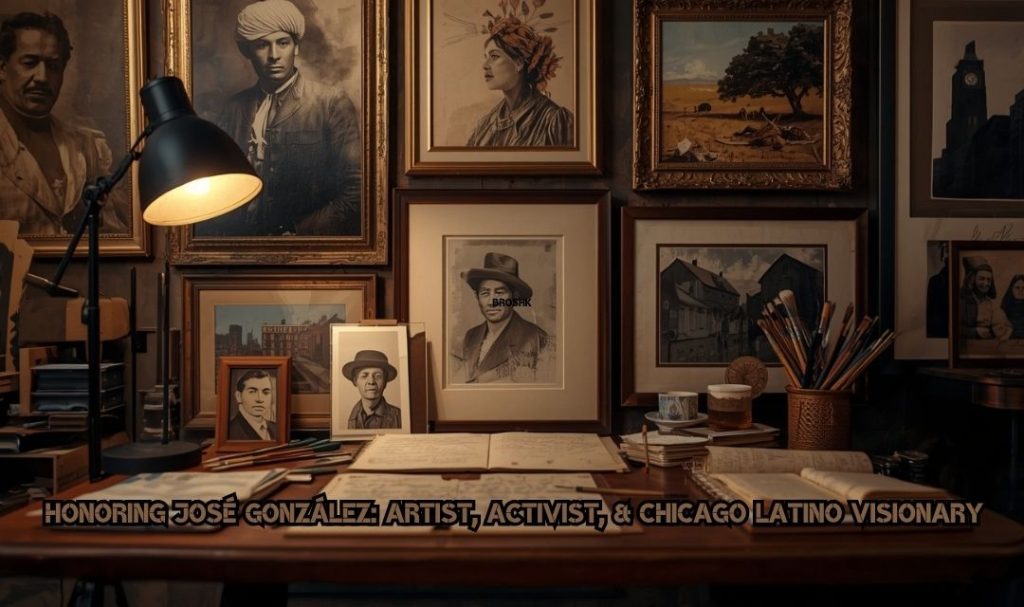

Some books do more than tell a story. They preserve a life, protect a legacy, and invite readers into a world that deserves to be remembered. An Album for José González is one of those books. It is not simply a tribute to an artist. It is a rich, immersive celebration of the life, work, and cultural impact of José González, a pivotal figure in Chicago Latino art and activism.
Through a powerful combination of images, documents, personal stories, historical context, and artistic reflection, the book creates a compelling portrait of a man whose influence reached far beyond the canvas. It honors González not only as an artist but also as a cultural leader, community voice, activist, and visionary whose work helped shape the identity and visibility of Latino art in Chicago.
At a time when readers are actively seeking stories about overlooked figures, underrepresented communities, and cultural movements that shaped American history, An Album for José González feels both timely and necessary. It speaks to art lovers, historians, educators, collectors, cultural readers, and anyone interested in the relationship between creativity, identity, and social change.
More Than a Tribute Book
At first glance, An Album for José González may appear to be a commemorative volume. But its importance goes much deeper. A tribute book often honors someone’s memory. This book does that, but it also builds a larger cultural record.
It brings together the many dimensions of González’s life and work, allowing readers to see him not as a distant historical figure, but as a living presence whose influence continues to matter. Through photographs, archival materials, artwork, and personal accounts, the book creates a layered experience. Readers are not only told why González was important; they are shown the world he helped create.
This visual and documentary approach gives the book a strong emotional quality. The reader can sense the movement, community, struggle, and creative energy surrounding González’s life. His work becomes part of a larger story about Latino identity, artistic resistance, and cultural pride in Chicago.
That is what makes the book so powerful. It does not reduce González to a name, date, or achievement. Instead, it presents him as a person shaped by history and as a person who helped shape history in return.
A Window Into Chicago Latino Art and Activism
José González holds an important place in the story of Chicago Latino art. His work and influence are connected to a broader movement of artists, activists, and cultural organizers who used creativity as a way to claim space, preserve identity, and challenge invisibility.
For many Latino artists, art has never existed separately from community. It has been a form of storytelling, protest, memory, education, and survival. An Album for José González captures this spirit beautifully. It shows how González’s creative life was connected to the social and cultural realities around him.
Chicago has long been a city shaped by migration, working-class communities, ethnic identity, and political struggle. Within that landscape, Latino artists played an essential role in making their communities visible. Their work appeared not only in galleries, but also in neighborhoods, cultural centers, classrooms, and activist spaces.
González’s legacy belongs to that larger history. His art and activism helped open doors for conversations about representation, belonging, and cultural dignity. This book gives readers a chance to understand that legacy in a personal and accessible way.
Why Visual Biography Matters Today
One of the strongest features of An Album for José González is its visual richness. Today’s readers are increasingly drawn to books that combine biography with images, documents, and personal artifacts. These books feel intimate, engaging, and memorable because they allow readers to experience history visually as well as emotionally.
This format is especially effective for a figure like González. His life was rooted in art, so it makes sense that his story would be told through a visual and documentary lens. The images do more than decorate the pages. They deepen the meaning of the story.
Photographs can reveal community. Documents can preserve history. Artwork can communicate emotion that words alone cannot fully capture. Together, these elements create a fuller understanding of González’s world.
For modern readers, this kind of book offers a more immersive reading experience. It feels like entering an archive, a gallery, and a personal memory all at once. That makes An Album for José González especially appealing to readers who enjoy cultural history, artist biographies, Latino studies, and visually driven nonfiction.
Honoring an Overlooked Cultural Legacy
Many important artists and cultural leaders do not receive the mainstream recognition they deserve during their lifetime. This is especially true for artists from underrepresented communities. Their work may shape neighborhoods, inspire movements, mentor younger generations, and influence cultural identity, yet still remain outside dominant historical narratives.
An Album for José González helps correct that imbalance.
By gathering and presenting González’s life and work in a dedicated volume, the book gives his legacy the attention it deserves. It also contributes to a broader effort to preserve Latino cultural history in the United States.
This matters because cultural memory is fragile. If stories are not documented, they can be forgotten. If artists are not studied, their influence can be overlooked. If communities are not represented in books, museums, classrooms, and public conversations, their contributions can be pushed to the margins.
This book stands against that forgetting. It gives readers a lasting record of González’s role in art, activism, and community life. It also reminds us that American art history is much richer when it includes the voices and visions that have too often been left out.
A Book That Fits Today’s Cultural Reading Trends
What stands out most about An Album for José González is how naturally it aligns with what today’s art and cultural history audience is seeking. Readers today are drawn to books that are meaningful, visually engaging, and socially aware. They want stories that deepen their understanding of culture, identity, and history.
This is especially true in online book communities. Platforms like BookTok, Instagram, Goodreads, and niche cultural reading groups have created new opportunities for books like this to find the right audience. Readers are not only looking for entertainment. They are looking for books that feel important, shareable, and connected to real human stories.
Books about overlooked artists, cultural movements, immigrant communities, and underrepresented histories often perform well in these spaces because they give readers something to talk about. They spark curiosity. They invite discussion. They allow people to discover a figure or movement they may not have known before.
An Album for José González has that kind of potential. Its visual nature makes it especially suitable for social media promotion. Interior images, archival details, quotes, and artwork can all become compelling promotional material. The book offers many entry points for readers: art, activism, Chicago history, Latino culture, biography, legacy, and community storytelling.
The Power of Personal Stories
Another major strength of the book is its use of personal stories. Historical facts are important, but personal memories give history its emotional weight. They help readers understand not just what someone did, but who they were and how they affected others.
In An Album for José González, personal stories help build a more intimate portrait. They reveal the relationships, values, passions, and commitments that shaped González’s life. They also show how his presence influenced the people around him.
This is what makes the book more than an academic or archival work. It feels human. It gives readers a sense of connection to González and to the community that remembers him.
For readers who may be discovering him for the first time, these personal elements create emotional access. They make the book approachable, heartfelt, and memorable.
A Valuable Resource for Readers, Educators, and Cultural Institutions
An Album for José González also has strong value beyond general readership. It can serve as an important resource for educators, students, libraries, museums, cultural centers, and Latino studies programs.
Because it combines biography, visual material, documents, and cultural history, the book can support conversations about art, activism, Chicago history, Latino identity, public memory, and representation. It offers a meaningful way to introduce readers to a cultural figure whose work connects to larger social and historical themes.
Libraries and cultural institutions, in particular, are often interested in books that preserve local and community history. This book fits that purpose well. It documents a legacy that belongs not only to one person, but to a broader cultural movement.
For art educators, it offers an opportunity to discuss the role of artists in society. For history teachers, it opens conversations about Latino communities in urban America. For community organizations, it serves as a reminder of the power of cultural leadership.
Why This Book Deserves Wider Recognition
The strongest reason An Album for José González deserves wider recognition is simple: it tells a story that matters.
It brings attention to an artist whose work and activism helped shape cultural life in Chicago. It honors a legacy rooted in creativity, community, and social purpose. It gives readers a visually rich and emotionally meaningful way to engage with Latino art history.
In today’s publishing landscape, books like this are especially important. They preserve stories that might otherwise remain known only within certain circles. They help broaden public understanding. They invite readers to see culture not as something abstract, but as something built by real people, real communities, and real struggles.
José González’s life and work deserve to be seen, studied, and celebrated. This book makes that possible.
Final Thoughts
An Album for José González is a powerful tribute, but it is also much more than that. It is a cultural document, a visual biography, a community archive, and a celebration of artistic legacy.
Through its images, documents, and personal stories, the book creates a compelling portrait of José González as an artist, activist, and visionary. It honors his impact while also introducing his story to new readers who care about art, identity, history, and representation.
For anyone interested in Chicago Latino art, cultural activism, visual biography, or the preservation of overlooked creative legacies, An Album for José González is a meaningful and necessary book. It reminds us that art does not only belong in galleries. It belongs in communities, in movements, in memory, and in the stories we choose to carry forward.